

Moss is not difficult to keep alive. It is, however, very easy to keep too wet. Because moss has no true roots, it takes in water across its whole surface, and that one fact changes everything about how you should water it. Get the balance right and a moss bowl, wall panel or terrarium will stay green for years. Get it wrong and you will be looking at a blackened, musty base within a fortnight. The routine below is the one worth sticking to: damp, aired, never drenched.
Why moss needs a different sort of watering
Most houseplants pull water up from compost through roots. Moss works the other way round. The fine threads at its base, called rhizoids, are for grip rather than drinking, so water and dissolved minerals arrive through the leaves and stems instead. The whole plant needs to be in contact with moisture, not just the sliver of it sitting on the soil.
That creates two opposite problems. Let moss dry out completely and it crisps up and browns, though it will often green again after a proper soak. Leave it permanently wet and it rots from the bottom, which is far harder to reverse. The target is the feel of a wrung-out sponge: cool, damp, with no water running off when you press it.
The weekly routine at a glance
You do not need a complicated schedule. You need a regular check and a willingness to skip watering when the moss does not need it.
- Once a week: a proper drink — a soak from below for trays and terrariums, or a thorough drenching for moss walls and panels, followed by a full drain.
- Two or three times a week: a light mist over the surface, mainly to keep humidity up around the moss rather than to water it.
- Every day in dry weather or heated rooms: a quick check with your fingers. If the surface feels dry to the touch, mist. If it feels damp, leave it alone.
- Every time you water: tip away any water still sitting in the tray or container after an hour. Standing water is the single most common cause of rot.
- Once a week: give the moss some air. Open a terrarium lid or move a bowl somewhere with gentle airflow for a few hours.
Misting: technique beats volume
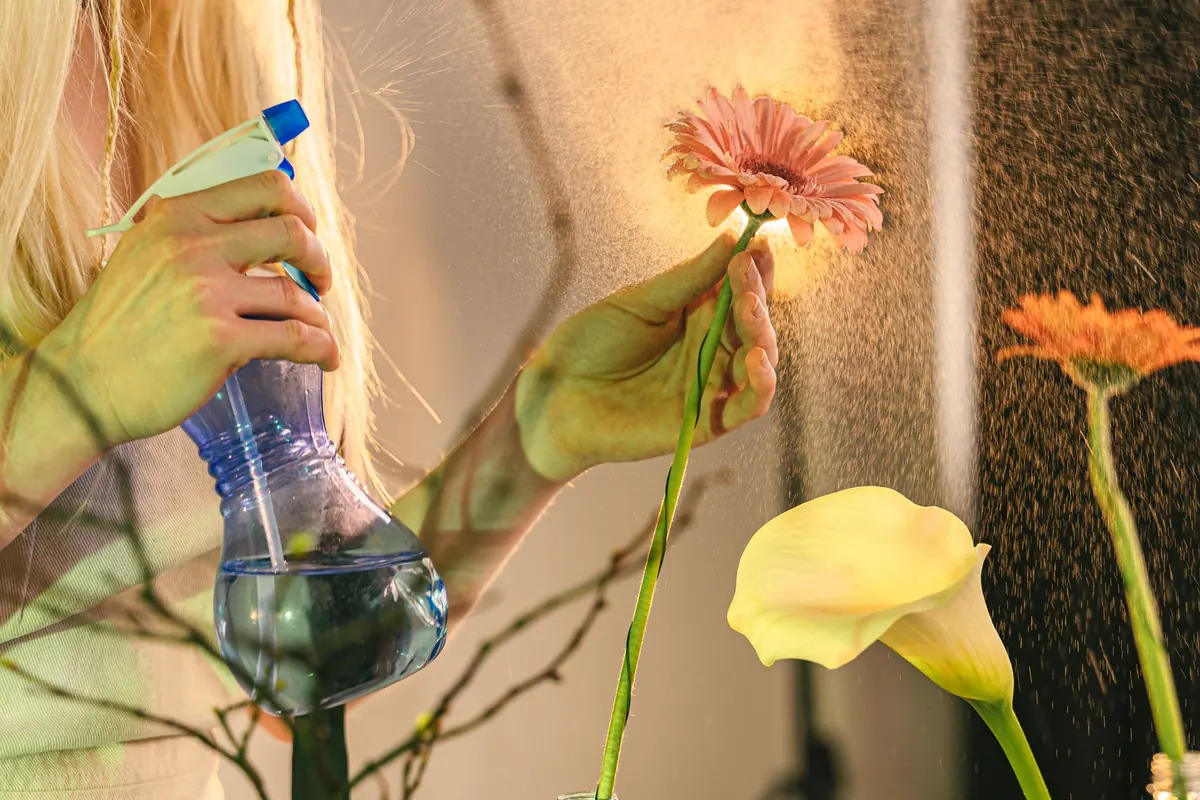
Misting is where most people go wrong, usually by misting heavily and often instead of watering properly. A heavy mist wets the surface, leaves the base dry, and keeps the top of the moss permanently soaked — the worst of both worlds.
Instead, hold the bottle 20–30 cm away and use a fine spray rather than a jet. Two slow passes across the surface is plenty. Aim at the moss itself, not the surrounding shelf or glass, and stop before water begins to bead and run. In a centrally heated room you might mist once a day in winter; in a cool bathroom, twice a week may be more than enough.
Water quality matters
Hard tap water leaves a pale, chalky crust on moss over time, and the chlorine in it does the surface no favours either. Rainwater is ideal if you can collect it. Filtered water is a good second choice. Leaving tap water to stand overnight helps with chlorine, but not with chloramine, which many water companies now use — so if you live in a hard water area, it is worth making the switch.
The squeeze test
If you can lift a corner of the moss, squeeze it gently. Damp and springy is right. If a drop of water runs down your fingers, it is too wet; if it crackles or feels brittle, it is too dry. This one check tells you more than any schedule.
If you can wring a drop out of it, it is already too wet.
When to water properly, not just mist
Misting raises humidity, but it rarely delivers enough water to reach the base of the moss. That is what the weekly drink is for.
For shallow trays, moss bowls and terrariums, bottom watering is the safest method. Stand the container in 1–2 cm of water for ten to twenty minutes, then lift it out and let it drain somewhere airy. The moss draws up what it needs and the excess stays behind. For moss walls and vertical panels, lay the panel flat if you can, pour water slowly over the surface until it is evenly damp, and let it drain thoroughly before hanging it back up.
Whichever method you use, never let the container sit in water afterwards. Damp moss with air around it thrives; moss in a puddle does not.
Signs of overwatering — and how to fix them
Overwatering rarely announces itself. It builds quietly for a week or two, then shows up all at once. Watch for:
- A musty, earthy smell when you open the lid or lean close.
- Dark, soft patches at the base of the moss, especially where it meets the soil or backing.
- Moss that has gone from green to a dull brown-black rather than a dry, crisp brown.
- A slimy film on the surface, or a green tinge of algae on glass and gravel.
- Fungus gnats hovering around the container.
- Water pooling in the base of a terrarium, or a tray that never seems to dry.
If two or more of these sound familiar, act now rather than waiting for the next watering day. Stop misting completely for a week. Tip out any standing water and blot the surface with a clean cloth. Increase airflow by opening the lid or moving the moss to a brighter, airier spot out of direct sun. Trim away any blackened, mushy patches with scissors — they will not recover, and leaving them invites mould. Then let the top dry slightly before you water again.
Underwatering looks different: pale, curling tips, a crisp texture, and moss that stays flat when you press it instead of springing back. It is usually easy to fix with a single soak, followed by a return to the normal routine.
Adjusting for seasons and rooms
Moss does not need the same amount of water all year. In summer, warmth and moving air dry it out faster, so you may need to water twice a week rather than once. In winter, growth slows and evaporation drops, but central heating strips moisture from the air — so keep misting while cutting back on the deep soaks.
Different mosses also have different appetites. Sphagnum, the pale, starry moss used in terrariums, likes to be noticeably wetter. Cushion mosses such as Leucobryum cope with short dry spells and prefer a lighter hand. Sheet mosses sit somewhere in between. Learn to read the moss in front of you rather than treating every piece the same.
Keep it damp, not drenched
The simplest way to stay on track is to fix one day a week for the proper watering and check by touch on the days in between. Keep a small spray bottle to hand so misting takes seconds, and get into the habit of emptying trays the moment you notice water in them.
Change one thing at a time. If the moss looks dry, add a soak rather than doubling up on misting. If it looks dark and tired, cut the water back and let the air in. Moss is forgiving once the rhythm is right, and a container that has been damp — not soggy — for a month will tell you so in the colour of its tips.
Photo: Antoni Shkraba / Pexels
Related posts
More stories you’ll love reading